- publié le
5 minutes de lecture
Breast Engorgement: Understanding, Relieving and Preventing It
When I first started breastfeeding, I remember hearing the same sentence over and over: “It’s normal for your breasts to feel as hard as rocks when your milk comes in.” But in reality, that’s not true. Breast engorgement is not an inevitable part of breastfeeding. This very common but often misunderstood phenomenon occurs when milk, blood, and lymphatic fluid accumulate in the breasts, creating painful pressure. The result: heavy, swollen breasts, sometimes red, a baby struggling to latch… and a mother who feels exhausted, worried, and sometimes discouraged.
The good news is: you can do something about it. Breast engorgement is both preventable and manageable—as long as you understand the causes, put your baby to the breast frequently and effectively right from birth, and know the best techniques to ease the discomfort. In this article, I’ll give you a full overview:
What breast engorgement is and what causes it
How to recognize and relieve it naturally
How to prevent it, especially during the milk “coming in” phase
As a mother and founder of Mumade, I believe deeply that breastfeeding should be a gentle, harmonious experience. Preventing engorgement means protecting that unique bond between you and your baby.
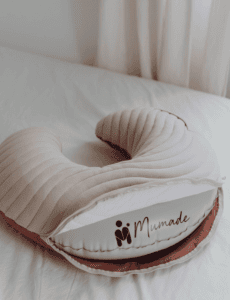
👉 For even closer skin-to-skin contact and a comfortable breastfeeding position, I recommend my Mumade nursing pillow, which keeps your baby safe and snug against you.
What is Breast Engorgement?
Engorgement happens when too much fluid builds up in the breasts. Contrary to what many people think, it’s not just milk—it’s also blood and lymphatic fluid pooling in the breast tissue. This makes the breasts swollen, tight, and sometimes warm to the touch.
This is a frequent process in early breastfeeding, but it can quickly become painful and make latching difficult.
Typical signs include:
Heavy, hard, swollen breasts
Tight, flattened areolas (baby struggles to latch)
Pain or warmth in the breasts
Sometimes mild fever or general malaise
What Causes the engorgement ?
Breast engorgement can have several causes, often combined:
Infrequent breastfeeding – if the baby doesn’t feed often enough, milk builds up.
Ineffective sucking – baby doesn’t remove milk well (poor latch, tongue-tie, etc.).
Milk “coming in” without enough nursing – around day 2–3 postpartum, there is a surge of milk and blood flow to the breasts. Without frequent nursing, balance is lost.
Not feeding on demand – scheduled feeds, supplements, or bottles early on can disrupt the natural rhythm.
Stress and fatigue – these affect the let-down reflex and worsen engorgement.
Engorgement and Milk Coming In – A False Myth
If engorgement has already set in, don’t panic. Here are the most effective, natural ways to ease it:
Frequent, effective breastfeeding – your baby is the best treatment.
Gentle breast massage – before and during feeds to stimulate flow.
Hand expression – if baby can’t latch, express a little milk by hand or with a pump to soften the areola.
Cabbage leaves or cool compresses – reduce inflammation and swelling.
Warmth before feeding – helps milk flow more easily.
A well-fitting nursing bra – comfortable, with no pressure points.
How to Relieve Engorgement
The best strategy is prevention. To avoid painful, swollen breasts, focus on the early days of breastfeeding:
Breastfeed on demand, without timing or restriction
Encourage skin-to-skin contact right after birth
Ensure good positioning (wide mouth, chin touching the breast)
Avoid bottles or supplements early on unless medically necessary
Seek support – midwife, IBCLC lactation consultant, breastfeeding group
When to Seek Help
If pain persists despite these measures, if you develop a fever, chills, or see a red, painful area, it’s important to get medical help quickly. Untreated engorgement can lead to mastitis.
And please—never blame yourself. Every breastfeeding journey is unique. What matters most is that you don’t go through it alone.
My Personal Experience and a Word of Encouragement
I know just how overwhelming those first days can feel. You want to do everything right, but sometimes it feels like too much. Engorgement can make you feel like you’re failing, but often it’s just about small adjustments.
If I could leave you with one message, it would be this: listen to yourself, find support, and trust your baby.